A Life Well Swum
An Interview with Graeme Lowe
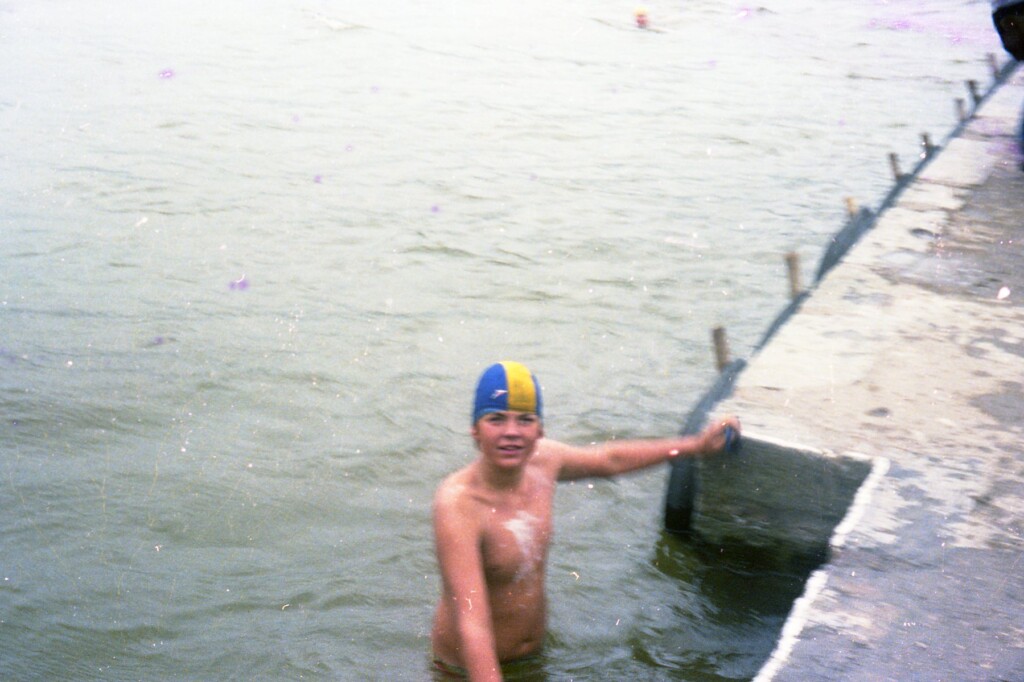
A Life Well Swum follows Graeme’s journey from swimming the length of Lake Windermere at 13, through a 30-year break from swimming, and eventually into the world of long-distance open-water swimming, including the English Channel and the notoriously tough North Channel.
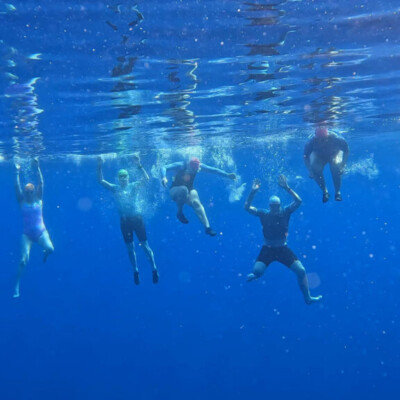
There’s also a rather lovely SwimQuest connection: Graeme is one of the swimmers who features in our logo. Alice took a GoPro underwater on that very first Mathraki trip, photographed the group from below and traced the swimmers’ silhouettes – meaning Graeme has quite literally been swimming across our merchandise for more than a decade!
We caught up with Graeme to talk about A Life Well Swum, the North Channel, that first Mathraki adventure and why, these days, the bacon roll afterwards matters more than the metres.
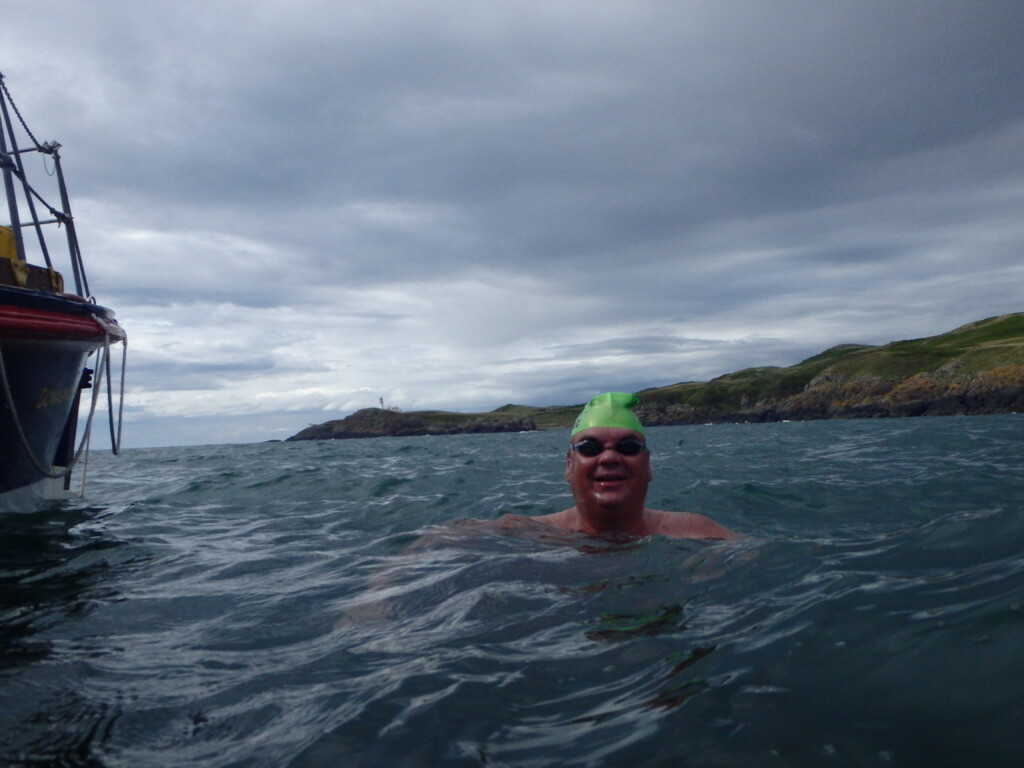
I begin the book in 12-degree water, swimming through hundreds of jellyfish. It may seem a strange place to start, but the prologue ends with a question that the rest of the book tries to answer: “How did a middle-aged, overweight family man end up taking on one of the toughest open-water challenges in the world?”
From there, I go back to my childhood, when I swam the 10-mile length of Lake Windermere at 13. Then comes a 30-year gap before I return to swimming in my forties to get fit. Those few lengths lead me into the world of long-distance swimming, to the English Channel and beyond.
I also included a second prologue called Water, Something Special, that explores what the sea and swimming mean to me. It’s only a page long, but I wanted it at the beginning to signal that the book is about more than a list of long-distance swims. The memoir is the story of how I found a place in the sea and in a community.
The North Channel is the 21-mile stretch of water between Northern Ireland and Scotland. Between the two lies cold water, strong tides and some of the toughest conditions in swimming.
Cold is the first problem, with temperatures significantly lower than the English Channel. Then there are the jellyfish, including lion’s manes, whose painful stings can become increasingly difficult to deal with over hours in the water. Finally, the tides are unforgiving, and you need to be fast enough to beat them. When I made my attempt, fewer than thirty swimmers had completed it.
In A Life Well Swum, the North Channel is my last major swim, the one that demanded the most but, strangely, gave me the most.
I went to Mathraki in 2014, after completing six tough swims in four years. They had taken a lot out of me, and I was struggling to get enthusiastic about taking on another challenge.
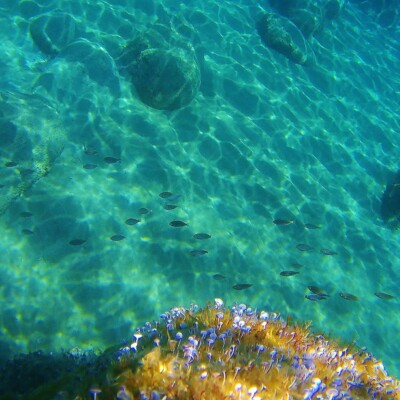
Going to Mathraki with SwimQuest helped me rediscover my love of swimming for its own sake. It’s a special place, with bright sunshine and clear blue water that you can happily swim in for hours.
After several years when swimming had become about training plans, distances and finishing, Mathraki reminded me that sometimes you can swim simply because you enjoy it.
There were only four of us on that first trip. I was with two friends from Jersey, and the fourth person was a less experienced swimmer, more comfortable with breaststroke than distance.
One thing I remember was how much care SwimQuest took to make sure that we were all looked after, despite our very different abilities.
One swim was about 3 km from a rock called Kravia to Corfu. The group became spread out and the boat stayed back to keep the slower swimmers safe. Two of us swam on ahead to the finish, not realising that you’d sent us in to land on a nudist beach.
We then had about 20 minutes before we were picked up by your boat, but there are worse places to wait.
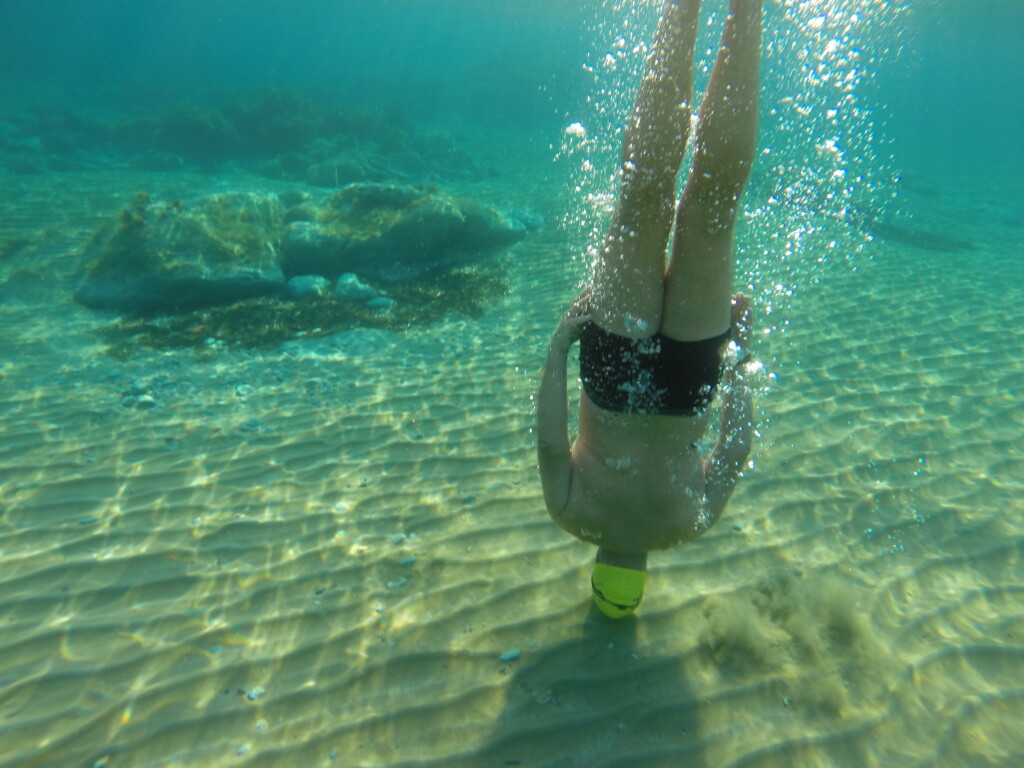
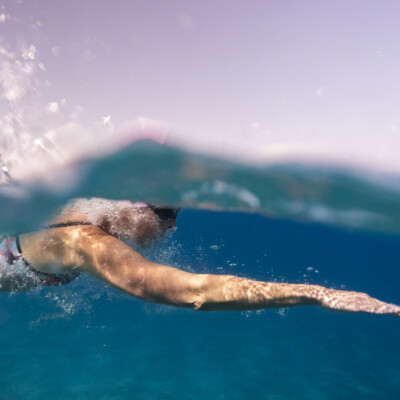
I remember you swimming beneath us like a mermaid and I marvelled that you could hold your breath for so long.
The result was some great photographs, and it’s fun to think that I’ve been part of your SwimQuest merchandise ever since. At the time, I didn’t realise how new to it you were because there was no sign of it, and it’s lovely to see how successful it’s all been.
Those photographs also captured Mathraki so well that they helped inspire me to go back in 2017. A few years later, my daughter went there with her husband too. So that first trip ended up having quite a legacy in our family.
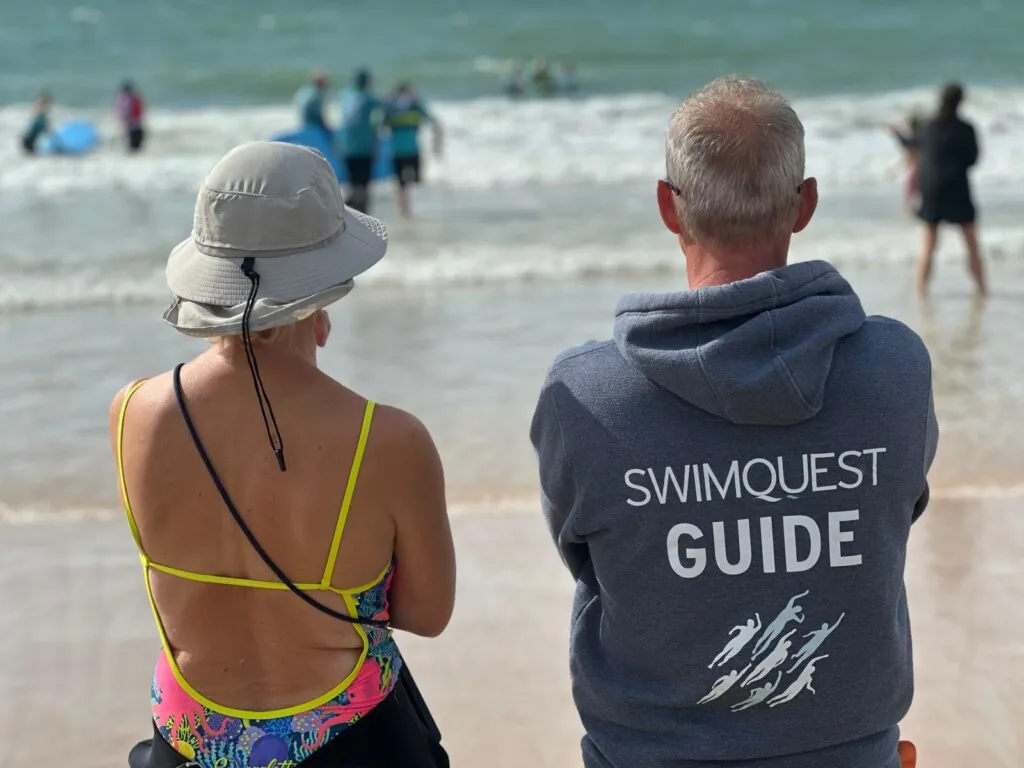
I'm still in the sea as much as I can, but these days the swims aren't about times or distances. They're about company and simply being in the water.
Jersey is a fabulous place to swim. It’s shaped a bit like a postcard dropped in the sea, and there’s always somewhere sheltered from the wind.
So, the first thing to do is check the forecast wind direction and, if it’s strong, head for the opposite side of the island.
The second thing to check is the tide. We have one of the largest tidal ranges in the world, which often catches visitors out. Some places, like St Brelade’s Bay, are fine throughout the tide, and low water just means a slightly longer walk to the sea. Others, like Plémont, are wonderful places to swim but need more care because the beach disappears as the tide rises.
And best of all, if you get somewhere and don’t like the look of it, the next bay is only a few minutes away on our nine miles by five island.
I managed a relay across the English Channel this summer, but that’s about the height of my ambition now, and I’m not planning another long solo swim.
I’m still in the sea as much as I can, but these days the swims aren’t about times or distances. They’re about company and simply being in the water.
The bacon roll afterwards matters more than the metres.
A Life Well Swum by Graeme Lowe is available from Amazon as an ebook, paperback and hardback, and the print editions can be ordered through most bookshops. If your local shop doesn’t have it on the shelf, just ask them to order a copy.
If you want more information to help you decide, head to Alifewellswum.com.
About Graeme Lowe
Graeme Lowe is a long-distance and open-water swimmer based in Jersey. His memoir, A Life Well Swum, explores his journey from childhood swimming to some of the world’s most challenging open-water swims, as well as the people, places and community he has found along the way.
With thanks to Graeme for sharing his story and photographs with us
Related stories
Guest Experience: Mathraki
Guest Experience: Mathraki long swims
You might be interested in